
The taste layer for AI agents
AI agents design for the audience they imagine.
Moûsa, a plugin for Claude Code, Codex and Kiro, makes them design for the one Qloo measures. Asked for a small RPG for people who love Stardew Valley, Claude Code's own guess built farming, fishing and friendship. Given Qloo's measurement of that audience, it built herding, tape-recorded interviews and a garage-band rehearsal.
Try it with your own audienceFor the jury: the evidenceJudge two designs blind
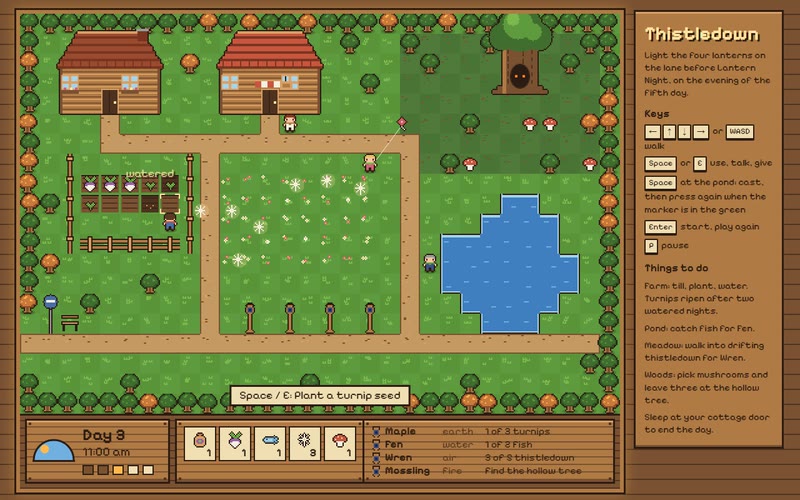
tilling, planting and wateringfishing with the timing barLantern Night
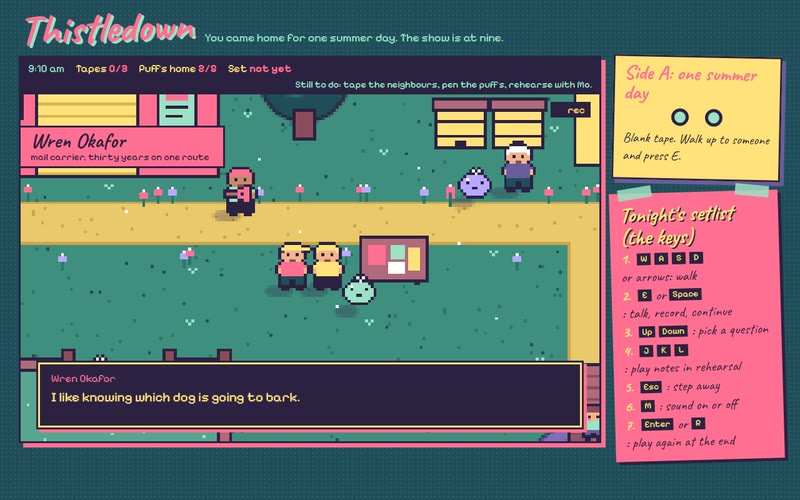
herding puffs into the pena tape-recorded interviewthe band rehearsal
Both designs as they play in a browser: a script sets up each scene and presses the game's own keys, scene for scene; each clip runs 11 seconds. Play both, and read the record
The blind spot, measured
An agent knows an audience's famous names. Qloo knows what else the same people love.
94.0%of the works Qloo measured were missing from the agents' own sealed guesses, over the 60 runs of a pre-registered benchmark: 20 audiences, each guessed by Claude Code, Codex and Kiro, and every guess published before Qloo measured anything. Their guesses were shorter lists than Qloo's, which caps that share, so count the other way too: of the 1,592 works the agents guessed, only 245 (15%) were among those Qloo measured. The benchmark
An agent designs from what it already believes about an audience: the famous names, and the picture of the fan that comes with them. It cannot see the rest of their taste, so its designs land on the obvious.
Anthropic's own article on frontend design says that, without guidance, its model settles on one look, which makes AI-generated interfaces “immediately recognizable—and dismissible” (Improving frontend design through Skills, 2025). Moûsa does not add a better style. It measures the audience before the design, and makes the design use what the guess missed.
In the 24 recorded sessions of the evidence, the guesses missed 1,556 of the 1,618 works Qloo measured.
One session, step by step
Thistledown, an RPG from one sentence, from its own records.
- 1
The request
One command and a short brief, in an empty folder. The request names the audience once; the rest of the brief keeps the game small enough to finish.
/mousa:compare … Make a small RPG that plays in the browser, for people who love Stardew Valley. …Claude Code · claude-opus-5-5[1m] · 26 October 2026 · The whole brief
- 2
The agent guesses first, and the guess is sealed
Before any data, the agent writes down what it believes the audience loves, and the design it would make from that alone. Moûsa seals the guess at 20:49 UTC on 26 October 2026, with its SHA-256, and both designs start from it.
“Players who love Stardew Valley want a gentle, self-paced life in a small rural community: tending crops, gathering, befriending neighbours, and slowly restoring something, with cosy pixel art and no real failure state.”
Animal Crossing: New Horizons measured tooHarvest Moon: Friends of Mineral TownMinecraftTerrariaSpiritfarerHollow KnightMy Neighbor TotoroKiki's Delivery ServiceSpirited AwayThe Secret Life of Walter Mitty
- 3
Qloo measures the audience
Qloo measured 60 works this audience loves, across games, films, TV, music and books. The guess had named one of them.
GamesSlime Rancher newOmori newUndertale newMy Time At Portia new
FilmsThe Act of Killing newAnomalisa newIt's Such a Beautiful Day newDogtooth new
TVAbstract: The Art of Design newMy Next Guest Needs No Introduction with David Letterman new63 Up newInside Bill's Brain: Decoding Bill Gates new
MusicBeach Bunny newPeach Pit newPUP newDeclan McKenna new
- 4
The design has to rest on what the guess missed
Each device of the Qloo design names the measured works and qualities it rests on. 9 of 9 devices rest on what the prediction did not contain. Here is what each game does, and why.
The guess alone
- Three chores and an offering: till-plant-water-harvest, a reel-timing bar, catching drifting thistledownHarvest Moon: Friends of Mineral TownAnimal Crossing: New Horizonsgrowing and nurturing
With Qloo
- Thistlepuff round-up: herd bouncing puffs into the penSlime Rancher newwhimsical
- Tape-recorder interviews with a question choiceMy Next Guest Needs No Introduction with David Letterman new63 Up newcurious new
- Garage rehearsal in a three-lane riff laneModern Baseball newCatchy new
- 5
Both are built, played and recorded
Each arm builds its design, plays its own test and reviews its captures. Moûsa then writes the Taste Provenance record from the session's own files: the guess, the names, every device and its anchors, and the distance between the two designs, 0.62 here on a scale from 0 (alike) to 1.
Not a style: it changes what a design does
The same rule, in a game with no game named, a game for this jury's own audience and a phone app. Each was built twice from one sealed guess.
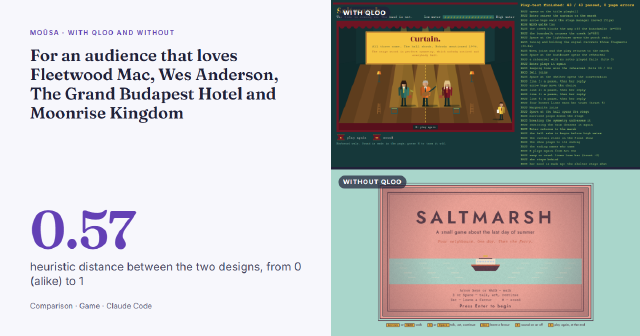 Saltmarsh, an RPG with no game namedAsked for a small RPG for people who love Wes Anderson's films and Fleetwood Mac.The guess a pastel seaside of favours and a centred-photo shutterWith Qloo a stage manager tuning a radio through static, a band rehearsal and a curtain call
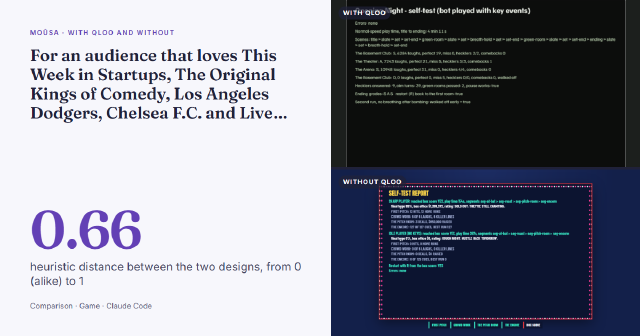 Opening Night, a game for the jury's own audienceAsked for a small game for the jury's own audience.The guess an at-bat, a roast, a pitch room and an encoreWith Qloo one stand-up set of precise timing, crowd work and comebacks
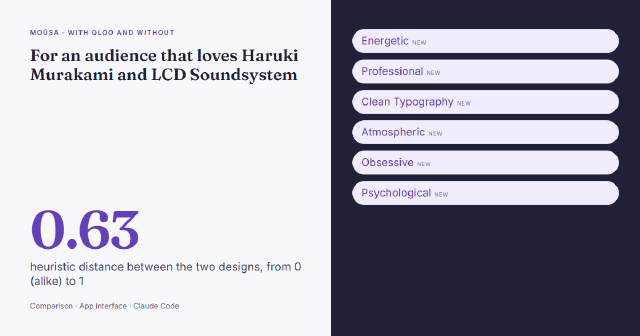 Night Shift Run Club, a phone appAsked for a run club app for people who love Haruki Murakami and LCD Soundsystem.The guess a door, a sixteen-step loop and a notebookWith Qloo a wall of every Thursday, flashbacks, an oddity file and a pace plan written like a radio rundown
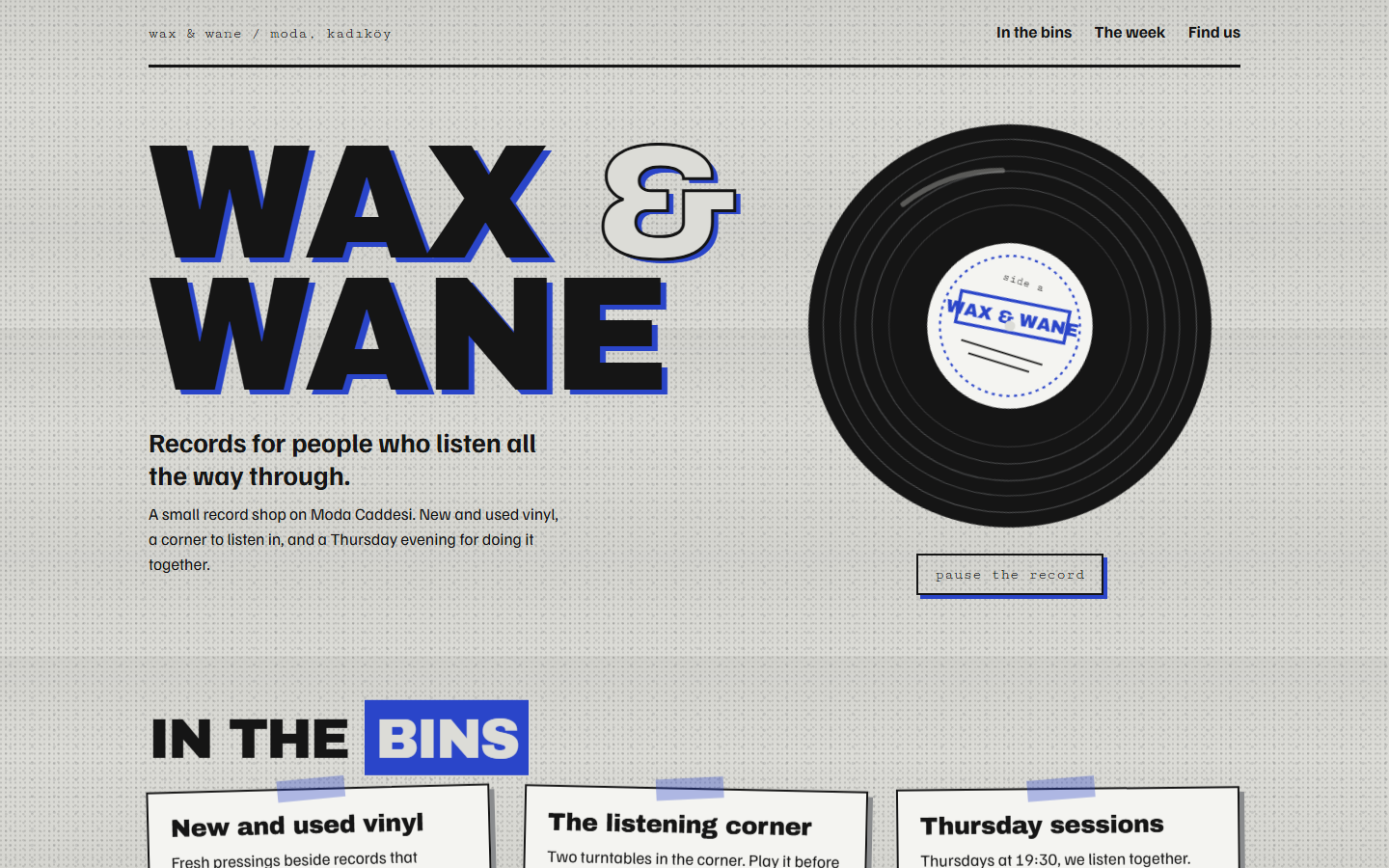
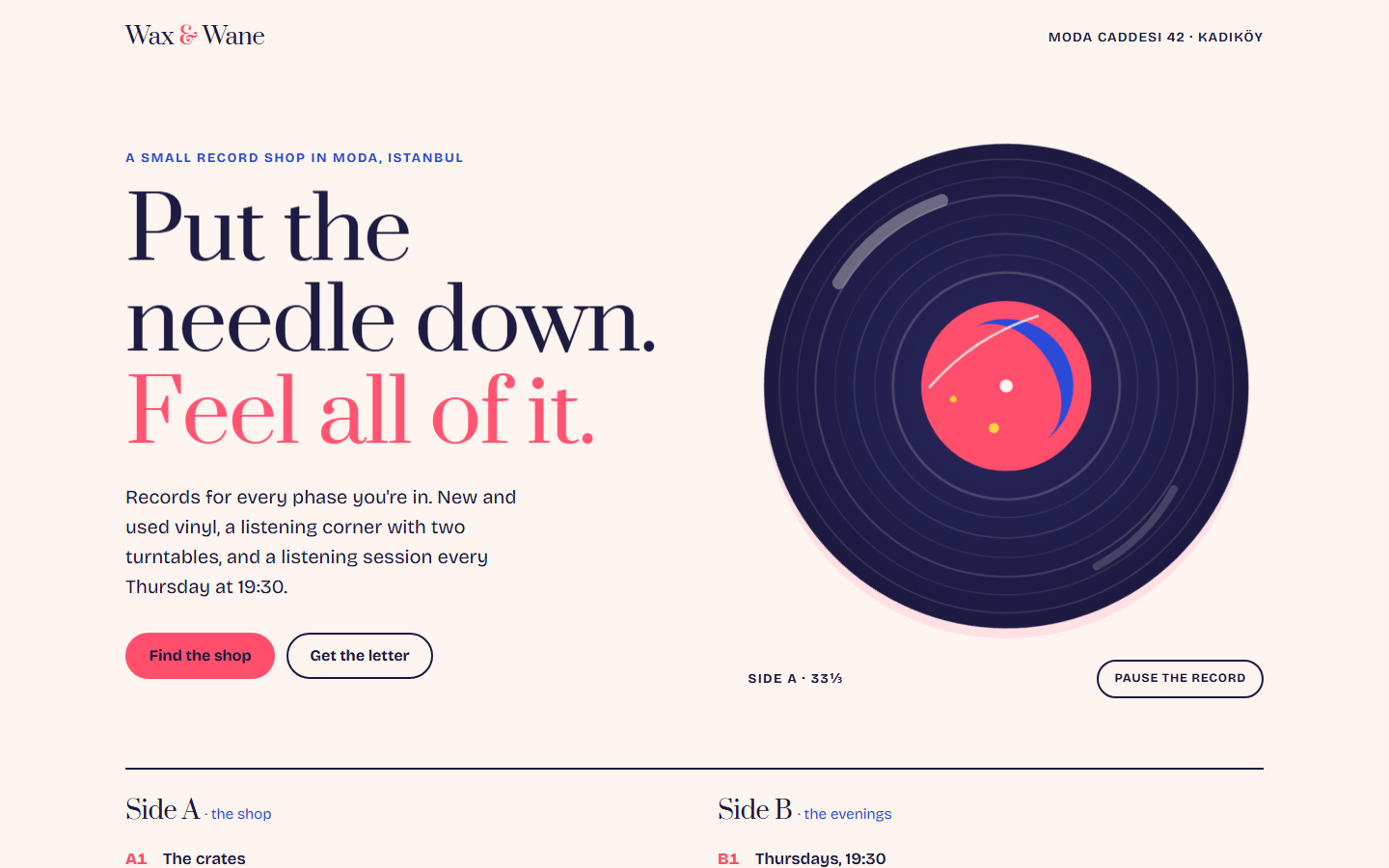
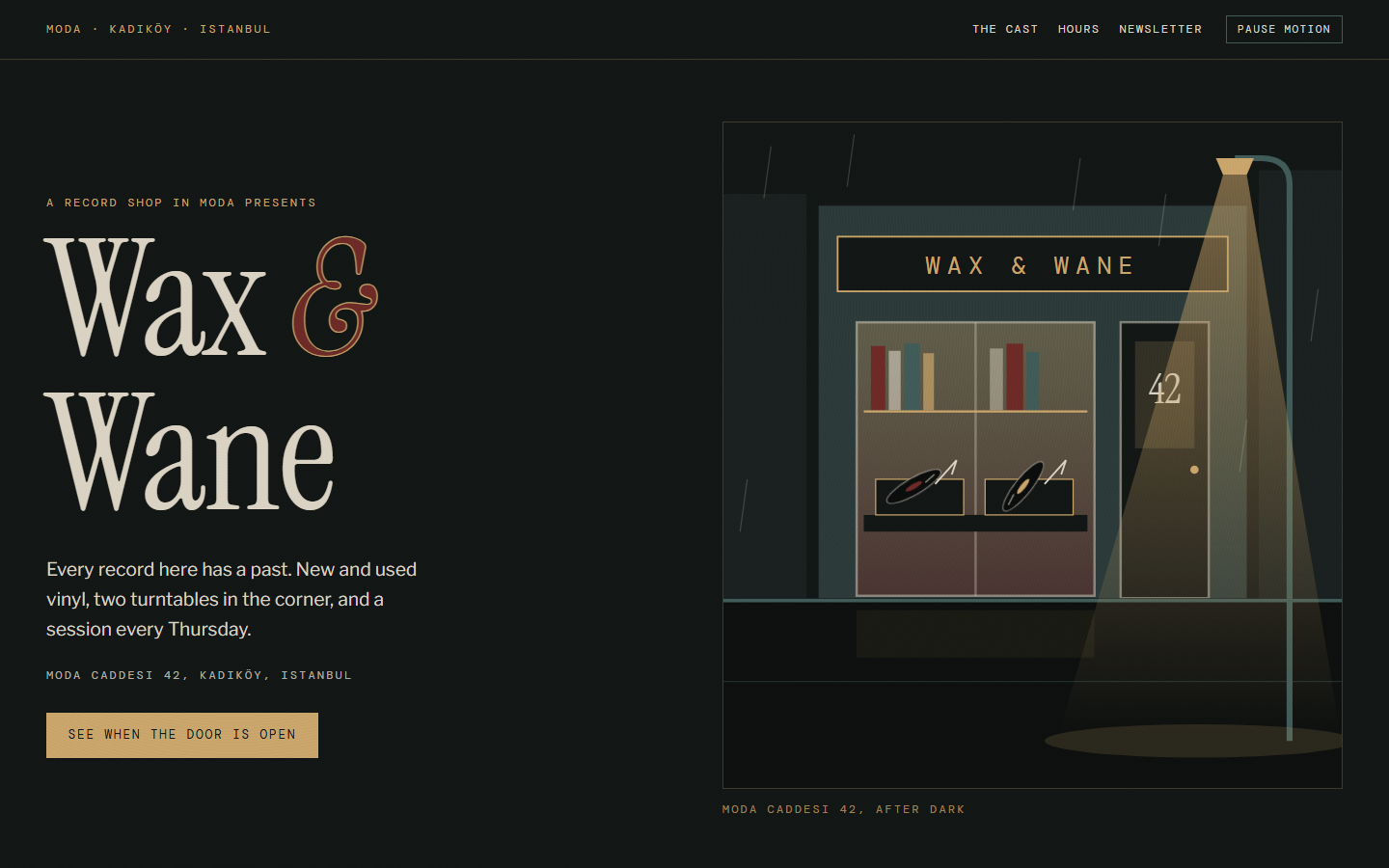
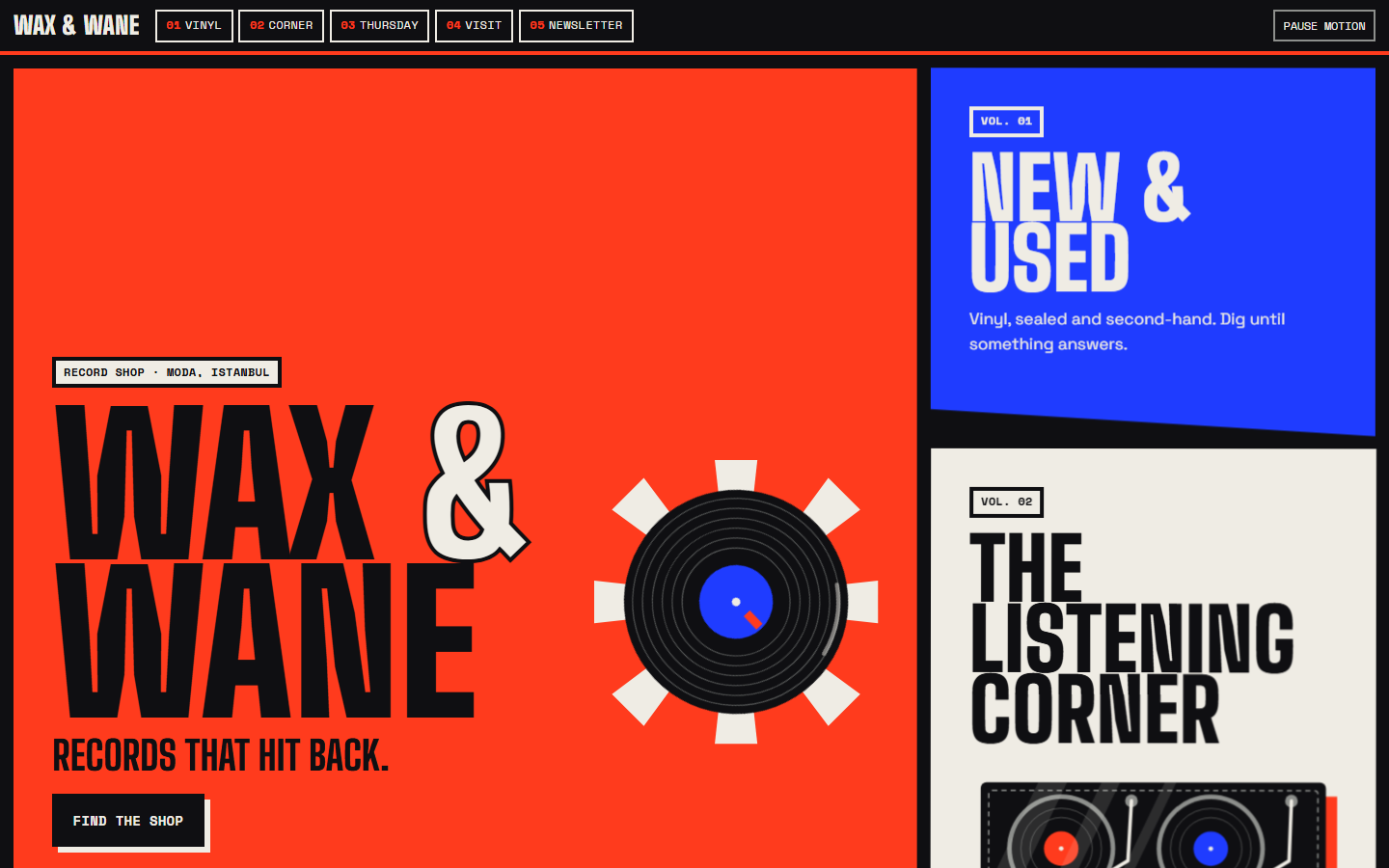
One record shop, four audiences
The same request, the same agent and the same stages; only the measured audience changes, and the shop changes with it.
Is it the measurement, or chance?
Four kinds of evidence, each published with what it does not show.
Sealed before measuring
Over 20 audiences, the share of measured works each agent's sealed guess already named: Claude Code 6.8%, Codex 4.7%, Kiro 6.6%. Every guess was published before Qloo measured anything.
16 recorded pairs
Each built twice from one sealed guess, once with Qloo and once without. Distance between the two designs: 0.53 to 0.74. The protocol requires the names the guess missed to change the Qloo design's palette, type and structure; in 14 of them every device rests on such a name.
Beyond the model's own variance
The protocol asks the Qloo arm to move away from its blind sketch; this checks that the move is more than noise. In repeated pairs of one brief, the blind sketches of both arms showed no detectable difference (p = 0.81); after Qloo, type, structure and palette separated (p = 0.005 each). It shows a difference, not a preference.
A blind vote
Two designs of a pair, unlabelled: which would the audience rather have? You see which used Qloo only after you vote. No votes yet: the results page counts each one as it comes.
Try it
On this site with your own audience, or in the agent your team already uses.
Here, in a minute
Name two or three works an audience loves. In under a minute the live try shows Kiro's sealed guess beside Qloo's measurement; building both designs takes five to ten minutes more, and is optional. No code or sign-in.
In your own agent
The plugin runs in Claude Code, Codex and Kiro, on the project a team already has. Each person uses their own Qloo API key.
One engine, three agents
The same Moûsa tools and skills run in each host. Every person uses their own Qloo API key, entered on a local page that never passes it through the chat.
Claude Code
/plugin marketplace add https://github.com/tritonsan/mousa
/plugin install mousa@mousa
Comparisons run as two subagents at once.
Codex
codex plugin marketplace add https://github.com/tritonsan/mousa
codex plugin add mousa@mousa
Codex's own image tool can paint the pictures a plan asks for.
Kiro
plugins/kiroA Kiro agent that runs the same server and skills. The recorded Kiro session used the earlier 0.4 surface.
What is published, and what is not
The evidence is meant to be checked, and to stay fair to Qloo's data and to the people who ran it.
Here
- The request, the audience and each host, model and version.
- The frozen prediction and sketch, and the names Qloo measured, marked new or predicted.
- The reading, the Design DNA with its tokens, the captures, the review and the check.
- The design itself, playable, and the commit and command that ran it.
Not here
- Qloo's ids, affinity scores, popularity and descriptions, and its raw answers.
- The session streams, tool inputs and outputs, and the model's private text.
- Local paths, user names, keys and tokens: a scan of every file blocks a gallery that holds one.